A guest can have a perfectly good dinner at your restaurant and still never come back.
No complaint. No bad review. No dramatic failure. They paid, left, meant to return someday — and then your restaurant quietly disappeared from their routine. That is what makes restaurant retention hard to see.
In practice, the missed opportunity is usually not the angry guest. It is the guest who had a good enough first visit, meant to come back, and then slipped into someone else's routine before your restaurant had any second touchpoint. Nobody posts a scathing review saying "I forgot to come back."
Restaurant guest retention is the ability to turn first-time and occasional diners into repeat guests by recognizing them, giving them a reason to return, and making the next visit easy to book.
In short: Many first-time restaurant guests don't return — not because something went wrong, but because nothing pulled them back. The restaurants that build a reliable base of regulars are the ones that make return visits feel earned, expected, and personally relevant.
Key Takeaways:
- Available industry data suggests guest retention is a major challenge — getting guests in the door once is the easier part; keeping them is not
- Guests typically drift away for predictable, fixable reasons: they felt anonymous, nothing reminded them to return, or the experience didn't give them a clear role for your restaurant in their life
- One of the strongest retention levers is direct, personal outreach — not broadcast promotions
- You can't fix what you can't see: knowing which guests are lapsing is the first step
The Numbers Show How Fragile the Second Visit Is
Available industry data points to a clear retention challenge. The DataDelivers 2025 Restaurant Guest Engagement Report, which analyzed purchase data from more than 68 million guests across 2,000+ locations, found that only 17% of guests who visited in 2023 returned the following year — and that retention rate held flat while the total pool of engaged guests continued to shrink. The same report also found that first-time guest retention improved by 300% when those guests received personalized outreach.
Toast's Regulars Report, released in 2026 in collaboration with Resy, adds context: regulars dine out 52% more frequently at their preferred spots than non-regulars. They're also far more likely to book ahead — only 17% of regular visits are walk-ins, compared to 52% for non-regulars.
These reports are not a perfect mirror of every independent restaurant. A neighborhood bistro, a tasting-menu restaurant, and a lunch spot will all see different return patterns. But the direction is useful: first visits are fragile, and repeat behavior rarely happens by accident.
The Second Visit Is the Real Goal
A first visit means someone was willing to try you. A second visit means something started to work. That second visit is where a restaurant begins to move from discovery to habit — and from habit to regularity.
This is why guest retention cannot start months later with a discount campaign. It starts immediately after the first visit: with recognition, a reason to return, and a booking path that does not create friction.
For many independent restaurants, the real retention problem is not the loyal regular everyone knows by name. It is the almost-regular: the guest who came once or twice, showed signs of interest, and then disappeared before anyone treated the relationship as something worth building. In a real service, this is rarely dramatic. The guest said they loved the pasta. The server forgot to write down it was their first visit. The owner recognized the face but not the name. Two months later, nobody could tell whether they came back or quietly became someone else's regular.
A lapsed restaurant guest is not necessarily an unhappy guest. Often, it is someone who had a good enough visit but received no reminder, no recognition, and no easy path back.
Why Restaurant Guests Don't Come Back: The Real Reasons
Restaurant owners tend to assume that if a guest doesn't return, something went wrong. Usually, it's more mundane than that.
They felt anonymous. A first-time guest who sat down, ordered, ate, paid, and left without a single moment of genuine acknowledgment is just a transaction. Nothing distinguishes your place from the dozen others they've been to this month. That's not a knock on your team — it's a natural result of a busy service when there's no system behind the human touches.
Nobody reminded them. The default assumption is that guests will come back when they feel like it. In reality, most people don't think about where to eat until the moment they're hungry — and in that moment, recency and convenience win. A restaurant they haven't thought about in six weeks is already at a disadvantage.
The experience felt generic. According to a 2025 SevenRooms consumer survey, nearly 80% of restaurants are still guessing at what guests actually want, while diners are raising their expectations for personalization. Nearly half of consumers said birthday and anniversary perks would increase their likelihood of returning — but 39% of restaurant owners don't offer them at all.
Life got in the way — and you had no way to reach them. This is the one many owners recognize immediately. A guest had a solid first visit. Then a busy stretch, a trip, a new habit somewhere else. Six weeks passed. You had no way to know, no way to reach out, no reason for them to remember you specifically. This isn't a hospitality failure. It's an information gap.
Of course, some guests don't return because the first visit genuinely missed: the food was inconsistent, the service felt cold, the room was too loud, or the value didn't feel right. There are cases where no amount of follow-up will help. If the experience wasn't worth repeating, a reminder message can even make the problem worse — it brings back a memory people would rather not revisit. Retention work only makes sense when the restaurant has something worth returning to. A guest database won't fix a weak experience. But many guests drift away even after a good visit — and that's where visibility, follow-up, and recognition make the difference.
What Gives Guests a Reason to Return
The answer is not to turn every restaurant into a marketing machine. Most independent restaurants don't need complex loyalty programs, points, or endless automated campaigns. They need something simpler: a reliable way to remember who came in, notice who is drifting, and make the next visit easy.
Personalized outreach can bring a guest back only if the first experience gave them something worth returning to. Assuming that foundation is there, the mechanism matters.
The DataDelivers data on this is worth sitting with. Guests who received direct, personalized outreach had a 34% retention rate in 2024. Guests who received non-personalized marketing — or no outreach at all — came back at just 8%. The report framed 1:1 marketing as its clearest finding across two years of data.
A guest who came once is unlikely to feel summoned back by the same Instagram post everyone else saw. What works is a message that feels like it was written because of them.
For an independent restaurant owner, that looks like:
A personal note after the first visit. If someone booked online, you have their contact info. A short follow-up — a thank you with a soft invitation to return — costs nothing and signals that you noticed they were there. Something like: "Thanks for joining us last Friday — we added a new seafood dish to the spring menu this week, thought you might be interested."
A personal message when they go quiet. If a regular hasn't been in for 45 days, that's worth acting on. Not a mass coupon blast, but something guest-specific: "Your usual Thursday table is open this week if you feel like coming by." That can be more compelling than a 20% discount sent to everyone.
Acknowledgment when they sit down. This one doesn't require any technology. When your host or server can say "welcome back" — and mean it — the guest's perception of the restaurant changes. They're no longer a cover. They're a person who is known here.
The Guest You "Know" May Still Be Invisible to the Team
Data does not replace hospitality. It supports it. A database cannot make a guest feel welcome by itself. But it can make sure the right detail reaches the right person before the guest sits down.
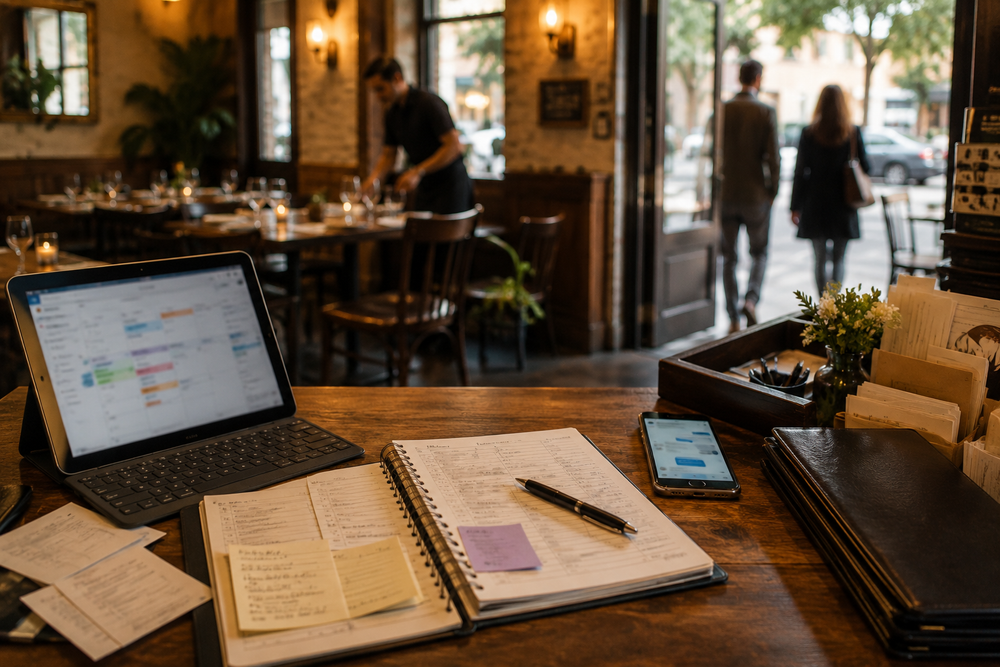
In many independent restaurants, guest memory is scattered across five places: the owner's head, the host's notebook, Instagram DMs, a server's memory, and yesterday's paper reservation sheet. That works until the person who remembers is off shift — or until the guest stops coming and nobody notices.
A guest may be "known" to the owner but invisible to the Saturday host. Someone may have mentioned a birthday in an Instagram DM, but that detail never makes it to the floor. A regular may prefer the corner table, but if the one server who remembers is off shift, the restaurant suddenly feels anonymous again. Staff turnover compounds this — when a front-of-house manager leaves, they take that knowledge with them.
Toast's Regulars Report makes clear that regular guests book ahead at far higher rates than occasional visitors. A reservation system doesn't create regulars by itself. But when repeat guests do book ahead, it gives the restaurant a reliable way to recognize patterns, capture history, and act before a guest lapses — turning vague memory ("I think that couple came in before") into visible signals: first visit, last visit, frequency, and how long since they've been in.
The goal is not to automate warmth. The goal is to stop losing the details that make warmth possible.
How to Bring Lapsed Restaurant Guests Back
Not every lapsed guest is lost. According to the DataDelivers report, win-back rates jumped significantly when restaurants used personalized direct outreach versus broad advertising.
The most expensive lost guest is often not the angry one. It is the one who came twice, liked the place, brought a friend once, and then quietly disappeared. The team may still think of them as "that nice couple from Thursday," but if nobody tracks the last visit, nobody knows when the relationship started cooling off.
A few things that work in practice:
Acknowledge the gap directly. "It's been a while" is more human than "We miss you." Don't be cute about it — just be direct.
Give them a specific reason to come back. A new menu item they haven't tried. A seasonal dish that fits what you know they ordered before. Not a discount — a reason.
Make booking easy. If the path back requires calling during service hours, many guests won't bother. The friction matters. A direct link to book online removes the one decision point where you can lose them again.
Don't wait too long. A guest who drifted six weeks ago is easier to win back than one who's been gone six months. The longer the gap, the weaker the memory of the first visit and the stronger whatever habit replaced you.
What To Put In Place This Month
A practical checklist for independent restaurant owners:
- Set up or audit your guest database — every reservation should capture a name and contact info
- Define what "lapsed" means for your restaurant (30 days? 45? 60?) and identify guests who've crossed that threshold
- Draft a short win-back message for lapsed guests — personal tone, no discounts, one clear next step
- Create a first-visit follow-up message to send within 48 hours of a new guest's booking
- Brief your front-of-house team on using guest history during service — even a simple "welcome back" is a retention tool
- Make sure your online booking is easy to find and takes less than two minutes to complete
- Decide on a review cadence — who checks guest visit frequency and when
How ToBeOut Fits Into This
ToBeOut gives independent restaurants the reservation and guest history data to make this kind of outreach possible. When you can see who came in, how often they visit, when they last booked, and what notes your team has captured, retention stops being a guess.
Every booking builds the guest record. Every guest record gives your team a better chance to recognize a regular, follow up with a first-time visitor, or notice when someone is starting to drift.
If you're running on a paper book or a system that doesn't track visit history, take a look at what ToBeOut does differently — it's built for restaurant owners who want guest data to support real hospitality, not just sit in a database.
Frequently Asked Questions
Why don't restaurant guests come back after a first visit?
Many first-time guests don't return because nothing specific pulled them back — not because something went wrong. Common reasons include feeling anonymous during the visit, not receiving any follow-up communication, and general life inertia. Available industry data suggests retention rates across the restaurant industry are low, and the DataDelivers 2025 Guest Engagement Report found that first-time guests without targeted outreach rarely return within the following year.
How can I get lapsed restaurant guests to come back?
Direct, personalized outreach is more effective than broad promotions. A message that acknowledges a specific guest's visit history — and gives them a concrete reason to return — tends to outperform generic discount emails. The key is having guest visit data in the first place, so you know who's lapsed and when.
What makes a restaurant guest become a regular?
Regulars typically form after a second or third positive visit, especially when they feel recognized and welcomed. According to Toast and Resy's Regulars Report (2026), regular guests book ahead far more often than occasional visitors, which suggests that the reservation habit and the loyalty habit tend to develop together.
How long does it take for a restaurant guest to be considered lapsed?
There's no universal answer — it depends on your typical visit frequency. A casual neighborhood spot might consider 45 days without a return visit a lapse signal. A special-occasion restaurant might look at 90 days. The right threshold is one you've defined deliberately and are actually monitoring.
Does personalized outreach really make a difference for guest retention?
Available data suggests it makes a significant difference. The DataDelivers 2025 Restaurant Guest Engagement Report found that guests who received personalized 1:1 marketing returned at a 34% rate, compared to 8% for those who received non-personalized marketing or none at all. For first-time guests specifically, personalized follow-up was associated with a 300% improvement in retention.
What's the simplest first step to improve restaurant guest retention?
The simplest first step is to track visit history consistently. That can be done through a reservation system, guest database, or another process your team actually uses. Without that record, retention work depends on memory — and memory walks out the door with staff turnover.