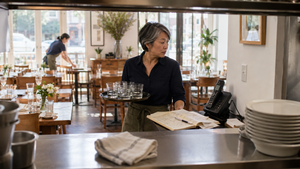

Empty tables on a busy Friday night aren't bad luck — they're a math problem with a real dollar figure attached.You were fully booked at 7pm. You turned away walk-ins at 6:45. Then three tables didn't show, two more arrived 40 minutes late, and by the time service stabilized, you were running half-capacity during your most valuable hour of the week. It happens constantly in independent restaurants, and most owners simply absorb the loss without ever calculating what it actually cost them.That calculation matters. Once you see the number, you can't unsee it.
What the Data Actually Says About No-Shows
The hospitality industry doesn't have one clean, universal no-show rate number — it varies by market, concept, reservation channel, and whether you have any kind of policy in place. But the range that shows up consistently in industry reporting is meaningful.According to a 2023 report from OpenTable, no-show rates across their platform average around 5–7% of all reservations on a typical night. On high-demand nights — Valentine's Day, New Year's Eve, Mother's Day — that number climbs significantly. Operators on OpenTable's own community forums have reported no-show rates exceeding 20% on holiday weekends with no deposit required.The National Restaurant Association notes in their 2024 State of the Restaurant Industry report that managing reservation reliability is among the top five operational challenges cited by full-service restaurant operators.The takeaway isn't a single scary statistic. It's that a 5–7% no-show rate on a 60-cover restaurant, over the course of a year, is a significant and entirely preventable revenue leak.
The Real Cost Calculation (Run It for Your Restaurant)
Most operators think about no-shows as "a few empty seats." The actual math looks different.Here's a straightforward way to calculate your annual revenue exposure:Step 1 — Find your average cover valueTake last month's total food and beverage revenue. Divide it by total covers served. That's your average revenue per seat.Step 2 — Estimate your no-show covers per weekIf you take 80 reservations on a weekend night and 6% don't show (average party size: 2.5), that's roughly 5 reservations or about 12 covers lost per night, or 24 covers over a Friday/Saturday weekend.Step 3 — Multiply by your contribution marginLabor is mostly fixed on a Friday night. You've already paid your staff. So the variable loss is closer to your gross profit margin on food and beverage — typically 60–70% for most full-service concepts, per industry benchmarks from Toast's 2024 Restaurant Trends Report.Step 4 — Annualize it
| Conservative | Moderate | |
|---|---|---|
| No-show covers / weekend night | 8 | 15 |
| Avg. revenue per cover | $45 | $55 |
| Contribution margin | 60% | 65% |
| Lost profit / weekend night | $216 | $536 |
| Annualized (50 weekends) | $10,800 | $26,800 |
These aren't invented numbers — they're the output of applying published industry averages to a mid-size independent restaurant. Your number will be different. Run the calculation with your actual figures.
For most operators doing this exercise for the first time, the result is uncomfortable.
Why Standard Reservation Systems Make This Worse
Here's the part that rarely gets discussed honestly: many reservation platforms are structurally indifferent to your no-show problem.
Large platforms like OpenTable and Resy make money primarily from diners — through network effects, restaurant discovery, and diner loyalty programs. Their incentive is to keep the booking experience as frictionless as possible for guests. That means minimal friction at the point of reservation. No required credit card. No deposit.
That's fine for them. It's not fine for you.
When a guest books through a platform with no friction, they have no skin in the game. Canceling — or just not showing up — costs them nothing. Many operators report that no-show rates are noticeably higher through third-party platforms than through their own direct booking channels, precisely because direct bookers tend to have a stronger relationship with the restaurant.
This is why reservation reminder systems matter as much as reservation policies. A guest who booked six days ago and hasn't thought about it since is far more likely to no-show than one who received a confirmation, a 48-hour reminder, and a same-day reminder asking them to confirm or cancel.A lightweight system that automates those reminders — and makes it genuinely easy to cancel — can cut your no-show rate significantly. Many operators report going from 8–10% no-shows to under 3% simply by adding a confirmation step with an easy cancellation link.
How to Set a No-Show Policy That Guests Actually Respect
You don't need to be heavy-handed. You need to be clear.The operators who handle this best do three things consistently:1. State the policy at the time of booking, not after the fact.If there's a cancellation window or a no-show fee, the guest needs to see it before they confirm the reservation. Burying it in a confirmation email is both less effective and less defensible if a guest disputes a charge.2. Make cancellation genuinely easy.The goal isn't to trap guests into showing up — it's to get advance notice so you can rebook the table. A policy that makes it hard to cancel will generate resentment and negative reviews, not compliance. Give guests a one-click cancellation link and a 24- or 48-hour window.3. Enforce consistently, but with discretion.No-show fees — typically $10–25 per person — work when applied evenly. If you charge some guests and not others, you train your regulars that the policy is negotiable. That said, first-time no-shows from regulars often deserve a phone call, not an immediate charge.Copy-paste policy template:"We hold reservations for 15 minutes past the stated time. Cancellations made less than 24 hours in advance or no-shows may be subject to a $[X] per-person fee. To cancel or modify your reservation, click the link in your confirmation email — it takes 30 seconds."Keep it direct, keep it human. Most guests respond well to policies that treat them like adults.
What a Reservation System Should Actually Do Here
Not every restaurant needs an expensive platform. But every restaurant taking reservations needs a few baseline tools.At minimum, your reservation system should:
- Send an automated confirmation immediately after booking
- Send a reminder 48 hours before the reservation with a one-click cancel option
- Send a same-day reminder asking the guest to confirm they're coming
- Collect a credit card at booking if you want to enforce a no-show policy
- Give you a simple way to track and analyze your no-show rate over time
That's not a complex feature list. But it's one that platforms charging $150–250/month sometimes bury in settings, while platforms that charge nothing (marketplaces) have no incentive to offer it at all.ToBeOut was built around exactly this problem. For $20/month, independent restaurants get automated reminders, easy cancellation links for guests, and the ability to require a credit card at booking — without needing to navigate an enterprise software dashboard or pay marketplace commission fees.
Quick Answers
What is a normal restaurant no-show rate?
According to OpenTable's platform data, average no-show rates typically fall between 5–7% of total reservations. That number rises on high-demand nights and tends to be lower when restaurants use confirmation reminders or require credit cards at booking. If your rate is consistently above 8–10%, something in your booking or reminder process likely needs attention.
Should I charge a no-show fee?
It depends on your concept and clientele. No-show fees ($10–25 per person is the common range) work well for tasting menu restaurants, prix fixe concepts, or any restaurant that genuinely cannot rebook a table on short notice. For casual full-service restaurants, a well-run reminder system may reduce no-shows enough that a fee policy isn't worth the guest friction. Start with reminders; add a fee policy if the problem persists.
How do I reduce no-shows without a fee?
The single most effective intervention, based on what operators consistently report, is a 48-hour reminder with an easy one-click cancellation option. When canceling is easy, guests who aren't coming will cancel instead of ghosting. You end up with the same empty table, but you get advance notice — enough time to rebook it or adjust staffing. Same-day confirmation messages also reduce last-minute no-shows meaningfully.
Can I track my no-show rate in a reservation system?
You should be able to. Any reservation system worth using should let you mark no-shows when they occur and pull a report over time. If yours doesn't, you're flying blind on one of the cleaner metrics in your operation. Your no-show rate, tracked weekly, tells you whether your reminder and policy setup is working — or needs adjustment.
The Bottom Line
Your restaurant no-show rate isn't a guest behavior problem you're stuck with. It's an operational process you can improve — with the right reminders, a clear policy, and a system that makes it easy for guests to cancel when their plans change. The difference between a 7% no-show rate and a 2% no-show rate, on a full weekend book, is real money: often thousands of dollars a month that's currently evaporating during your most valuable hours.If you want to stop losing covers you already booked, try ToBeOut free — no credit card, setup takes 15 minutes. Start free trial →
Sources
OpenTable (2023): No-show rates average 5–7% of reservations across platform. Referenced in platform operator resources and community reporting.
National Restaurant Association — 2024 State of the Restaurant Industry Report: Managing reservation reliability cited among top five operational challenges for full-service operators.
Toast — 2024 Restaurant Trends Report: Gross profit margin benchmarks for full-service restaurants (60–70% range on food and beverage).